Artificial intelligence is quickly becoming part of the education system as it begins to enter classrooms and other learning environments. AI is revolutionizing knowledge delivery and consumption through smart tutoring systems, automated grading and more. Nevertheless, human teachers still have a crucial role of giving guidance and mentoring and motivating the students. It is not only about who is better but how they both can create the future.
Learning about AI Teachers.
- Individualized learning process among all the students.
- On-the-fly feedback and auto-tests.
- Incessant learning: 24/7.
- Data-driven performance tracking
- Teaching a large group of students in a scaled manner.
Individualized Learning Systems.
AI teachers can be tailored to the pace and style of learning of each student. These systems can find out the strengths and weaknesses based on the performance information and then tailor lessons based on these factors. This is so that no student is left behind or held back, which makes the learning process more efficient, focused and engaging to the students with varying abilities.
Live Feedback and Assessment.
The capability of offering instant feedback is one of the largest benefits of AI. Students are able to know instantly whether their answers are right or wrong and can be offered some hints to improve their answers. This minimizes the learning differences, strengthens concepts more quickly and assists in building confidence by performing constant assessment and enhancement.
24/7 Learning Support.
The AI systems can be accessible whenever needed, and this is unlike the traditional classrooms. The AI tools are used to provide a student with continuous access to learning materials whether they are studying late at night or in the morning. This is particularly useful to self-paced learners and learners who have to deal with other obligations and education.
Strength of Human Teachers.
- Emotional intelligence and empathy.
- Skill to inspire and motivate students.
- On-the-fly flexibility of the classroom.
- Give emphasis to moral and social development.
- Fostering creativity and critical thinking.
Emotional Connection and Support.
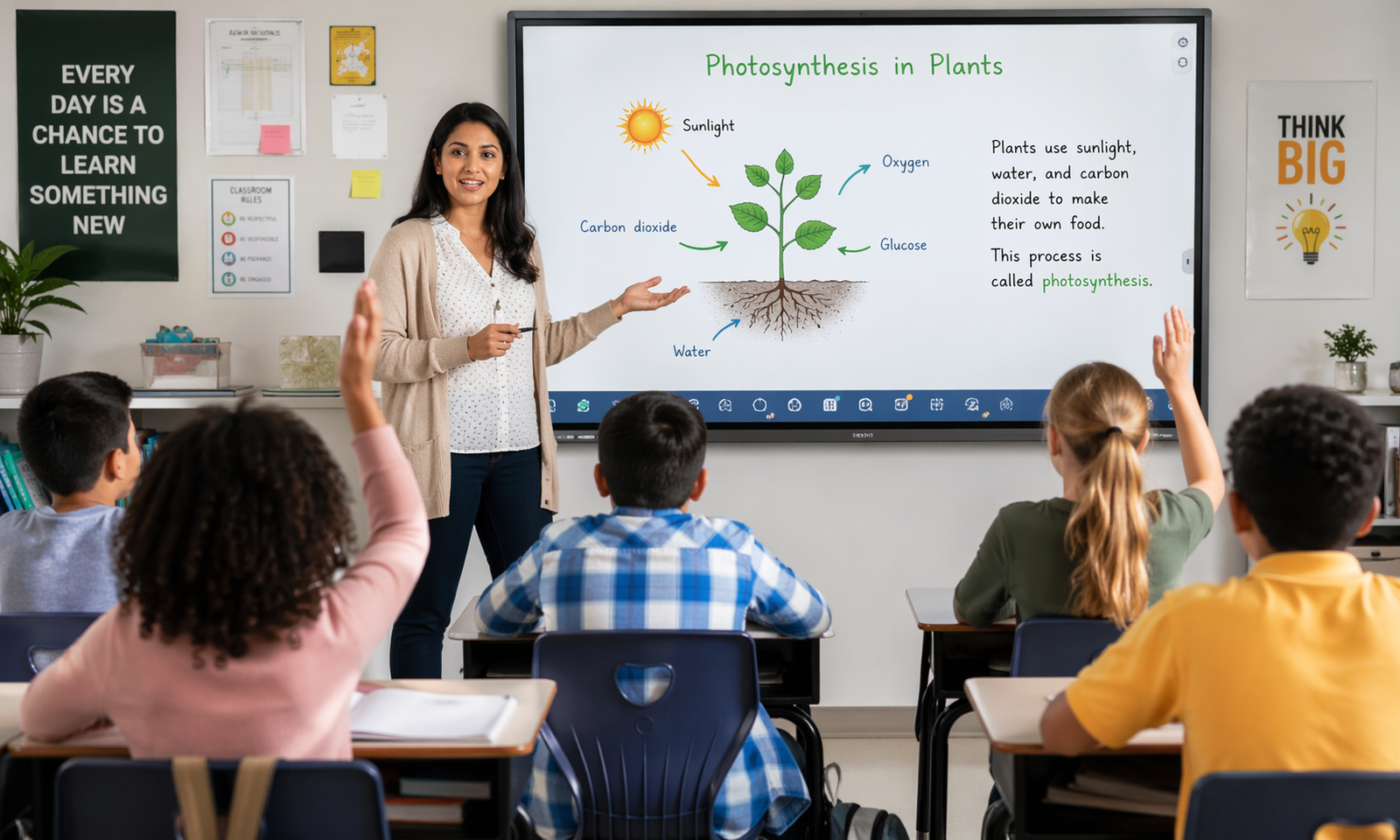
Human teachers know students other than their performance in academics. They understand feelings, individual problems, and styles of actions, and provide assistance which is way more than textbooks. This emotional bond forms a secure and encouraging learning atmosphere that students will feel appreciated and comprehended.
Promoting Critical Thinking.
Educators are very important in creating problem-solving and analytical skills. They involve students in questioning, analyzing and thinking independently through discussions, debates and interactive teaching techniques, instead of memorizing information.
As Mentors and Guides.
A teacher is not only a teacher but a guide who can determine the personality of a student and his future. They also offer life direction, experience and teach students not to be afraid or aimless in their pursuits.
AI vs Human Teachers -Balanced Approach.
Effectiveness vs Sensibility.
AI is also effective in the provision of content within a short time and with high accuracy hence making learning very efficient. But it does not have the human touch that is essential to develop trust, empathy and emotional sense, which are important facets of good education.
Consistency vs Innovation.
With AI systems, there is no fatigue in quality provision and all the students will have similar learning experiences. Human teachers, on the other hand, inject creativity, narration, and active methods of instruction, which make the lessons more interactive and memorable.
Availability vs Attachment.
AI opens education to students all over the world and particularly in remote or under-served regions. Nonetheless, human teachers establish close personal relationships that boost motivation, discipline and emotional development- aspects that cannot be produced by technology.
Future of Education.
Hybrid Learning Models.
The future of AI technology is in integrating it with human instruction. Repetitive tasks such as grading, data analysis and content delivery can be managed by AI, whereas the teachers can concentrate on interaction, mentoring, and more profound learning experience. This partnership boosts efficiency and quality.
Smarter Classrooms
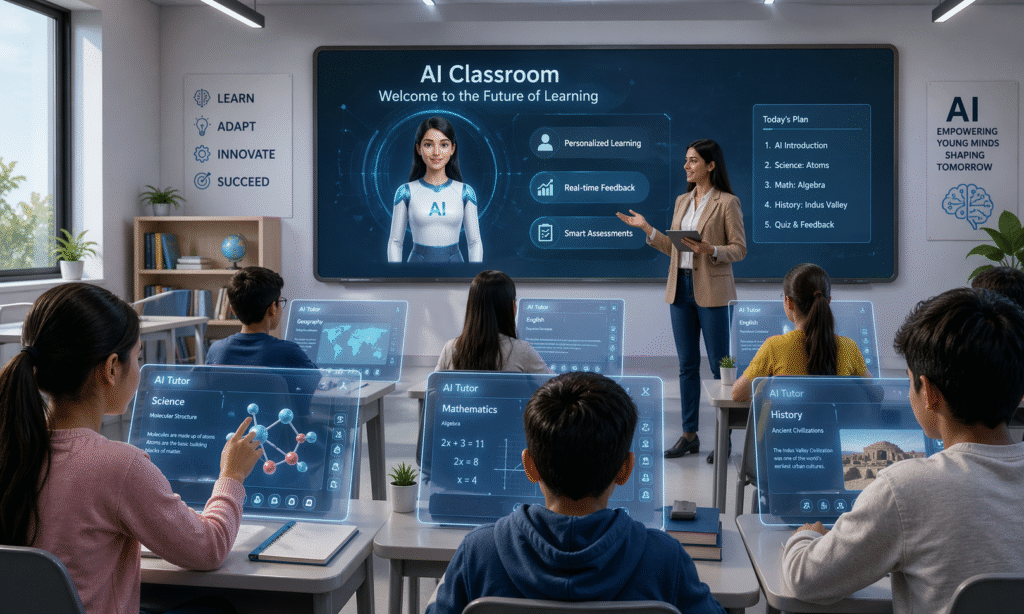
The use of AI-based tools is making modern classrooms more advanced with real-time insights regarding the performance of students. This data can assist teachers to customize their instruction and to spot struggling students at an early stage and to enhance learning across the board.
Lifelong Learning Opportunities.
With the help of AI, people can keep learning even after school through online platforms and adaptive systems. Nevertheless, the human teachers make sure that learners are motivated, disciplined and focused in their learning process.
Conclusion
Artificial intelligence teachers represent effective solutions to increase efficiency, accessibility, and personalization of education. Nevertheless, human teachers cannot be substituted in terms of emotional bonding, nurturing and comprehensive growth. It is not a matter of one or the other in the future but cooperation. An equitable approach with AI facilitating and teachers in the lead will facilitate a more productive, captivating, and significant learning experience.
FAQs
1. Will AI be able to substitute human teachers in the future?
No, AI will not be able to completely substitute teachers since it is not emotionally intelligent and cannot create meaningful relationships with the people.
2. What are the greatest AI advantages in education?
AI offers individualized learning, immediate feedback and access to learning content at any time.
3. And what is the reason why human teachers are needed?
They provide emotional support, mentorship and assist the students to acquire critical thinking and social skills.
4. What is the concept of hybrid learning?
Hybrid learning is a blend of AI and the conventional mode of teaching, which aims at improving the learning experiences.
5. Who will have the future of education?
Neither human beings nor AI will act on their own- both will collaborate to create the future of education.