There is a fast-growing trend in the automotive business whereby cars are becoming software-first platforms where cars are no longer machines but smart systems. AI-defined vehicles will be the next step in developing cars that will be able to think, learn and adapt on the fly. These cars are a blend of artificial intelligence, data processing, and connectivity to become intelligent robots on wheels, reshaping the mobility, safety, and user experience.
Definitions of AI-Defined Vehicles?
AI-defined cars are those cars in which the core functions are controlled by software and artificial intelligence. These vehicles are not based on mechanical systems only, but they are smart and can be efficient due to high-quality algorithms and real-time information. Everything is driven by AI as far as driving decisions to predictive maintenance are concerned.
Software-Centric Architecture
In modern cars, the platforms on which they are constructed are centralized software, and as such, they can be updated on how to perform certain functions remotely. This implies that your vehicle will be able to become better over time, without having to be physically improved. OTA allows updating with new functions, bug-fixes and performance improvements, turning vehicles into something that is future-proof and in a constant state of flux.
Real-Time Decision Making
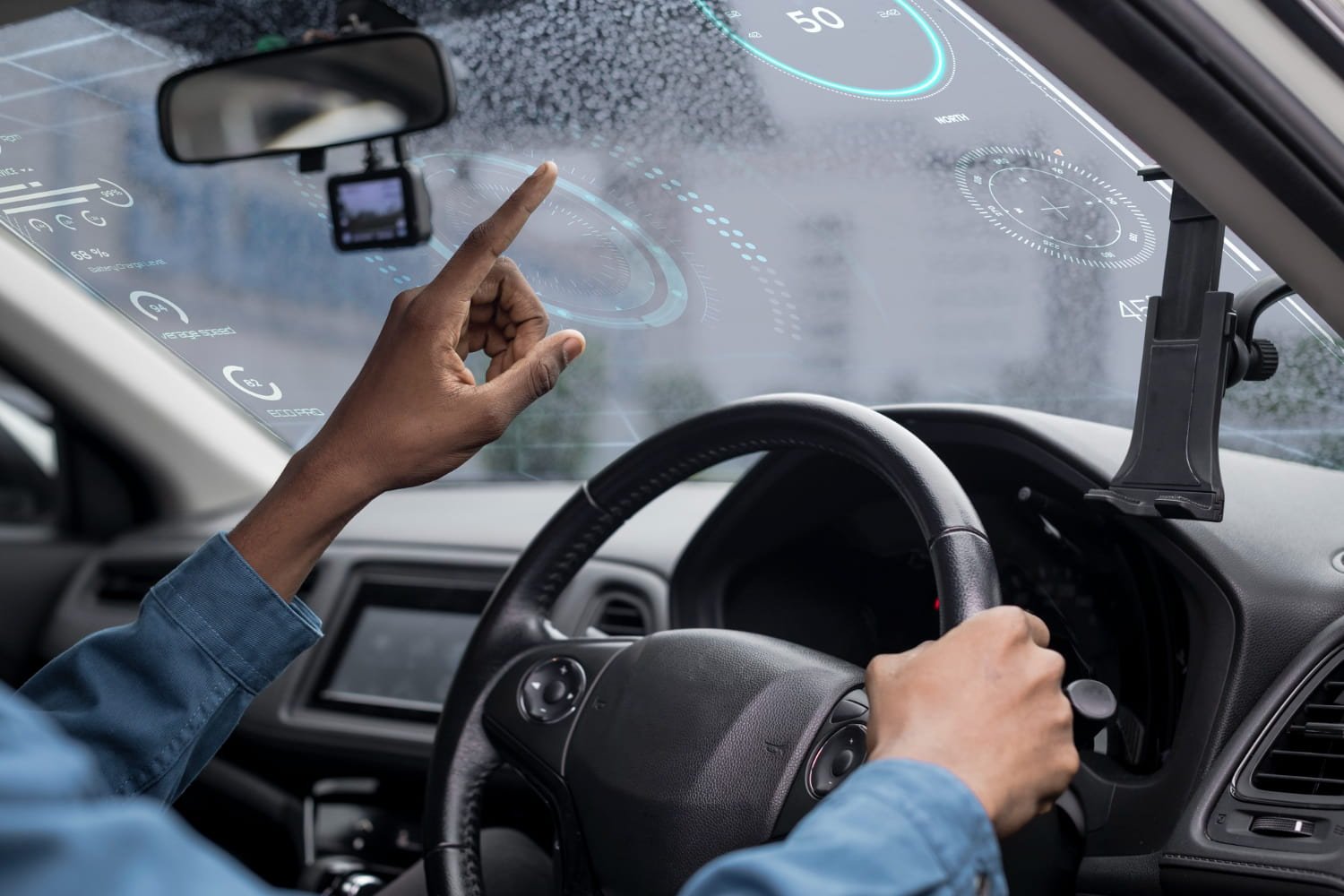
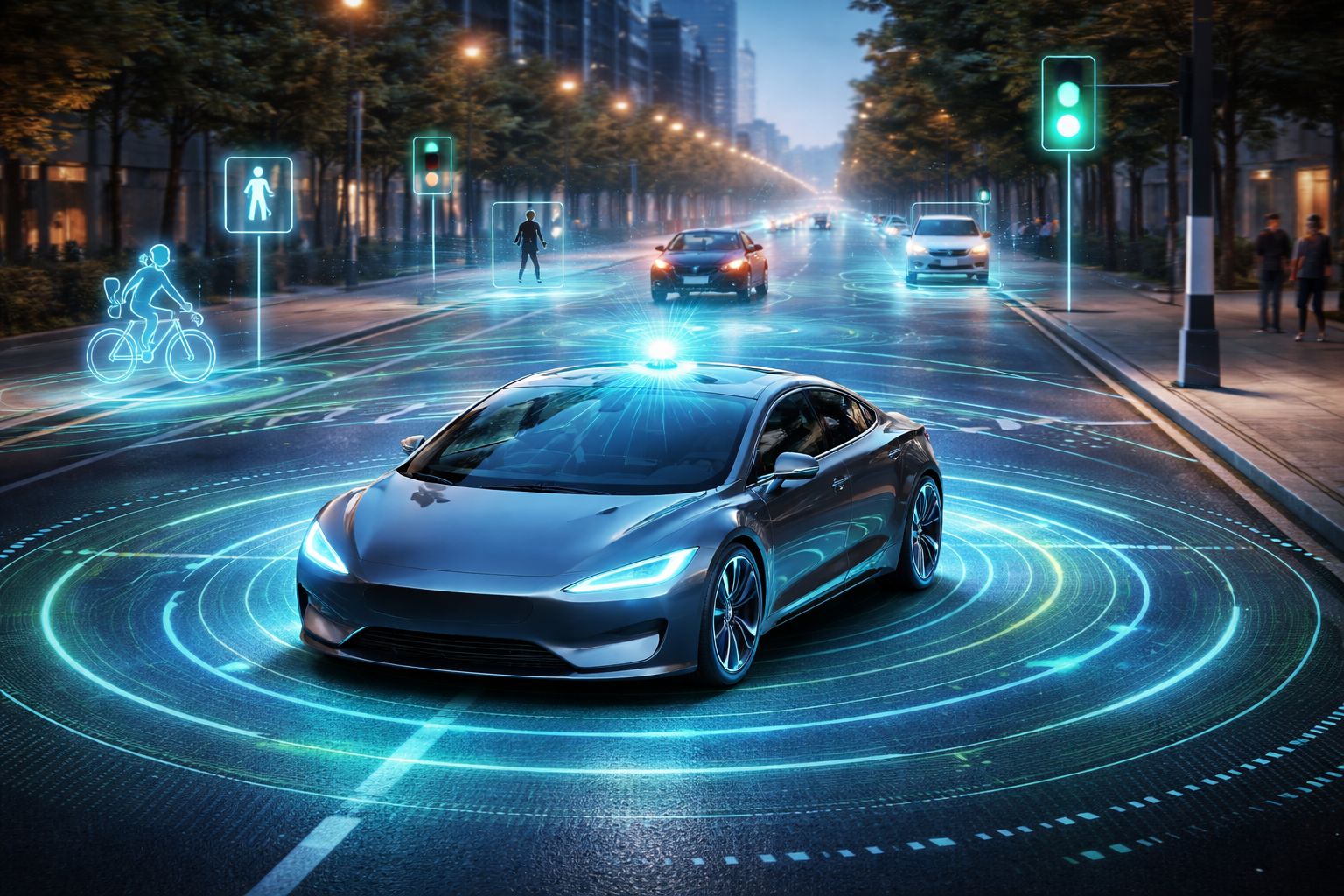
Vehicles defined by AI process data in huge amounts in real time. The information is fed to AI systems using sensors and cameras and analyzed based on the situation such as the traffic, obstacles and the state of the roads. This enables the car to decide in a split-second, making driving a car in tricky situations easy and safe.
Continuous Learning
Machine learning will help vehicles to learn each trip. These systems keep on enhancing their performance and accuracy by analyzing their driving patterns and environmental data. As time passes, the car will be smarter and will accustom to the preferences of the driver, as well as to the outside factors.
Basic Technology to drive AI cars.
Artificial Intelligence / Machine Learning.
These vehicles have an AI as their brain. It takes sensor information, recognizes objects, anticipates motion and makes driving choices. Deep learning models enable cars to cope with tricky situations like the traffic in a city, human behavior, and unpredictable objects.
Sensor Fusion Systems
The AI-defined cars are based on various sensors, such as cameras, LiDAR, radar, and ultrasonic sensors. The information obtained in all these sources is integrated to produce a full accurate picture of the surroundings in sensor fusion. This will guarantee good perception under adverse weather such as dark or foggy weather.
High-Performance Computing
There is a lot of computing power demanded in these vehicles. The next generation processors are capable of billions of operations in a second, and thus real time analytics and decision making. This is a backbone to computing that is critical to supporting autonomous functions and AI-driven features.
The advantages of AI-Defined Vehicles.
- Improved Safety: Minimizes human error related accidents by monitoring in real-time and predictive analytics.
- Enhanced Economy: Makes the routes efficient, consumes less fuel, and less traffic congestion.
- Customized Experience: Can be customized to user preferences such as seating, climate and entertainment settings.
- Autonomous Capabilities: Allows autonomous driving capabilities, making it easier to use by the elderly and disabled.
- Predictive Maintenance: It identifies the problems in time and notifies users when mechanical failures take place.
Challenges and Risks
- Data Privacy Concerns: The mass data collection brings up privacy concerns of individuals and misuse of data.
- Hacking: Systems connected together can be attacked and must have powerful security systems.
- Regulatory Barriers: Governments continue to establish regulations and safety guidelines of self-driving cars.
- High Costs: Technology: Due to high technology, costs of production and ownership of technology are high.
- Ethical issues: AI has to decide on complex matters of critical situations with ethical concerns.
AI-Defined Vehicles Trends in the Future.
Fully Autonomous Driving
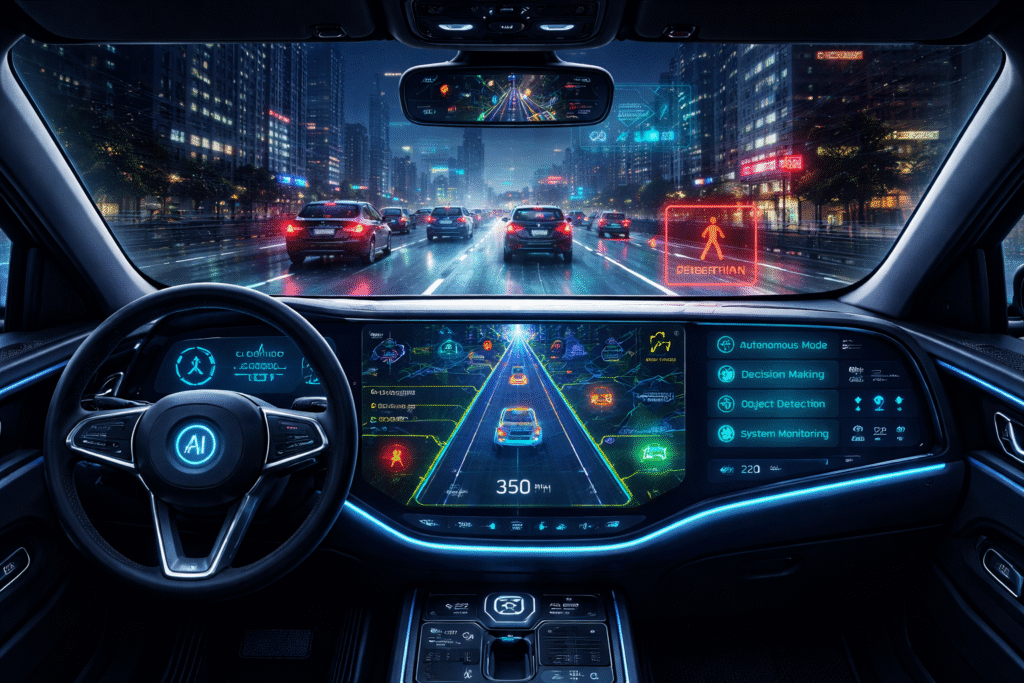
The objective of Level 5 autonomy (no human intervention in vehicles) is getting more and more realistic. On-going innovations in AI and sensor technology are making this change possible and we are now closer to a day when cars will be able to drive completely autonomously.
AI-Powered Mobility Ecosystems
The AI-defined vehicles will be able to blend well with smart cities, traffic, and infrastructure. This interconnected ecosystem will enhance the flow of traffic, decrease the congestion and improve the efficiency of transportation in general.
Conclusion
The automotive industry is becoming digital and intelligent through AI-defined vehicles, which are changing the industry into a digital, intelligent ecosystem. These cars are transforming the concept of driving by integrating the use of artificial intelligence, connectivity, and enhanced computing. Although cybersecurity, regulations, and cost are issues that need to be tackled, the advantages, including improved safety, efficiency, and personalization, are too high to be overlooked. With the ongoing advancement in technology, cars will more and more act as intelligent robots in motion, defining how we move in the future and in ways that we are yet to appreciate.
More often than not, these are Frequently Asked Questions (FAQs).
1. A car that contains an AI-defined system is called AI-defined.
An AI-defined car is based on software and artificial intelligence to perform the fundamental functions of the car such as navigation, safety, and decision-making, as opposed to completely mechanical systems.
2. Do AI-defined vehicles completely act autonomously?
Vehicles that are defined by AI are not all autonomous. Most of them are now at semi-automation stages and do not fully automate the drivers but aid them.
3. Are AI-driven cars safe?
The automobiles that are controlled by AI can be safer than those which are controlled by humans because of the decreased number of human error, but issues such as edge-cases remain.
4. Will AI cars be able to learn with time?
Yes, with machine learning these vehicles will become better and better through driving data analysis and updating their algorithms.
5. How is the AI-defined vehicle’s greatest challenge?
The greatest issues are regulatory acceptance, cybersecurity threats and the provision of safety in real-life complex environments.