The wearable technology of 2026 is changing at a pace that has not been seen before, as the world is changing the way we will deal with devices, track our health, and even communicate with our brains. Next generation wearables are no more accessories with innovative smart glasses, AI-enhanced health tracking, and futuristic brain chips, but have become necessities in our lives. The tech giants, such as Apple, Meta, and Neuralink, are driving this revolution to the limit and challenging the boundaries of innovations.
The Emergence of Smart Glasses.
Features Driving Adoption
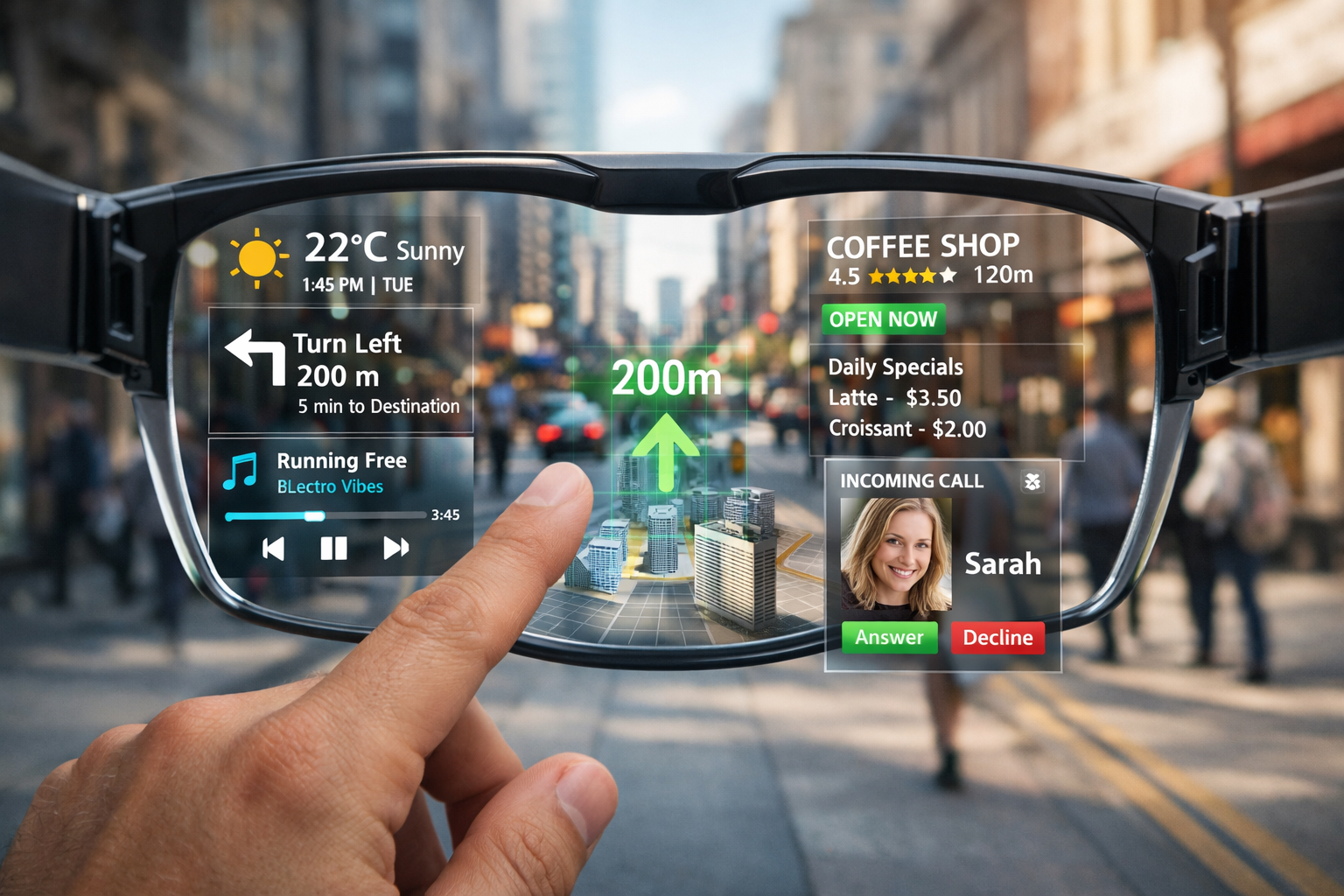
Current day smart glasses are also much more sophisticated than the ones that were released previously, and they provide immersive augmented reality (AR) experiences, incorporating digital content with the real world. The user is able to get turn-by-turn navigation, language translation in real-time, take pictures and videos and even hold meetings virtually with holographic displays. These gadgets are also getting lighter, more fashionable and they are powerful to substitute some of the smartphone functions. Such companies as Meta and Google are also making heavy investments in AR ecosystems, which guarantee them smoother functionality and more practical use in the real world.
Real-World Use Cases
Smart glasses are revolutionizing various industries. In the medical sector, surgeons will be in a position to have real-time data of the patients being operated without turning their heads. Students in education can have access to 3D models that can be interactive and thus, learning is made more interactive. Remote working makes virtual screens and real-time annotations seamless in workplaces. It is one of the largest factors that contribute to a quick uptake of smart glasses in 2026 since it is a hands-free, immersive experience.
Significant Future Trends of Next-Gen Wearables in 2026.
- Smart glasses that provide us with augmented reality in real-life.
- Brain chips that allow direct communication with the digital systems and the human brain.
- The high-tech health tracking tools that track various vital parameters all the time.
- Artificial intelligence-based information that assists the user with enhanced lifestyle and health choices.
- Harmonious connectivity between smart phones, smart homes and other IoT devices.
- Greater emphasis on privacy, security and ethical applications of personal data.
Brain Chips: Future of Human Computer Interaction.
The mechanism of Brain Chips.
One of the most innovative technologies in the sphere of wearables is brain-computer interfaces (BCIs). Brain chips are allowing direct communication between machines and the human brain with the development of brain chips being spearheaded by companies such as Neuralink. These are implanted in the brain and perform the functions of reading neural signals with the help of electrodes. Sophisticated artificial intelligence algorithms then decode these signals and translate them into instructions that can operate digital devices like computers, smartphones or artificial limbs.
Possible Advantages and hurdles.
The uses of brain chips are endless. They are able to assist the paralyzed ones to be independent by simply thinking to control the devices. They can also allow quicker communication, memory improvement, as well as create new opportunities in the field of games and virtual worlds. Nevertheless, this technology is very ethically questionable. Such concerns as data privacy, data security in the brain, its possible abuse, and their long-term biological impact should be resolved before mass use becomes safe and acceptable.
Health Tracking Wearables: Smarter Than Ever.
Advanced Health Monitoring
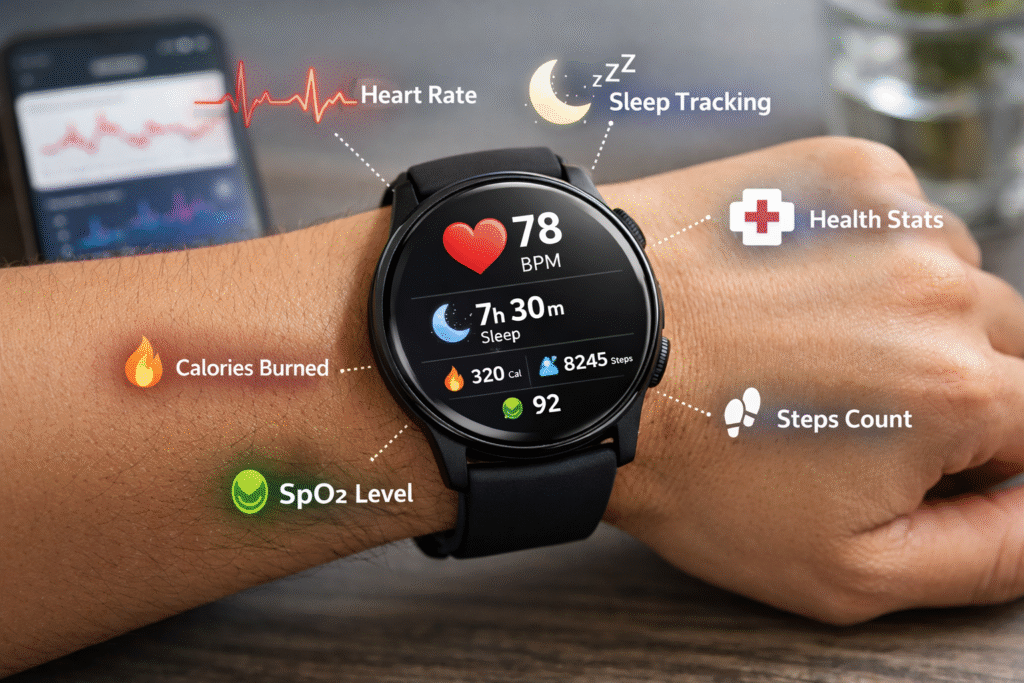
Health wearables have become high-end medical devices. The gadgets of such manufacturers as Fitbit and Apple are now able to track the variability of heart rate, the level of oxygen in the blood, the quality of sleep, the level of stress, and even the irregular heartbeats. Non-invasive glucose monitoring is also being introduced by some next-gen devices, and it is a breakthrough in the condition management fields such as Diabetes. The constant tracking will enable users to keep updated about their health status.
AI-Powered Insights
Wearable devices are more powerful with the help of artificial intelligence which processes vast quantities of health information. Such devices will be able to identify anomalies, anticipate the possible risks of health, and make tailored recommendations, including the need to sleep better, reduce stress, or exercise more. Such a transition in healthcare, which is reactive to preventive, is one of the greatest values of next-gen wearables.
Artificial intelligence and the internet of things.
Seamless Connectivity
The combination of AI and the Internet of Things (IoT) is establishing a new connected environment in which wearable devices can communicate with other smart technologies. As an illustration, a wearable can be able to sense the increased stress and automatically regulate the lights, play relaxing music or remind the user to have a rest. Firms such as Samsung are striving towards the development of single ecosystems that are more convenient and automated in daily living.
Privacy and Security Issues.
Addressing the Risks
Privacy is a significant issue following wearables that have been gathering sensitive personal and health information. The users are becoming more conscious of the usage and storage of their data. To solve this, businesses are adopting effective encryption techniques, secure cloud backup, and data transparency. Governments and regulatory authorities are also intervening to provide rules that would guarantee ethical use and security of user information.
Conclusion
The wearable devices of the future, 2026, will not be an improvement of the technologies of the previous generation, but a significant change in the way humans communicate with machines and maintain their health. The influence is revolutionary, whether it is smart glasses that enhance the real-life experience or brain chip that allows one to think and control their thoughts or health devices that provide them with real-time information. Although such issues as privacy or ethical issues cannot disappear, the future of wearables will be smarter, safer, and better embedded in our daily life due to the constant innovations of such companies as Apple and Neuralink.
FAQs
1. What are the next-gen wearables?
Next-gen wearables are high-tech products such as the smart glasses, brain chips, and health trackers which are capable of making life easier and tracking health with the help of AI, sensors, and connectivity.
2. Is it safe to use brain chips on humans?
Brain chips have not yet reached the stage of development. Although initial outcomes are optimistic, safety and ethical issues are yet to be investigated in the long term.
3. What are the differences between smart glasses and ordinary glasses?
Smart glasses have in-built features such as AR displays, cameras, and voice assistants, through which a user can engage with digital content in real time.
4. The accuracy of health tracking wearables?
The current wearables are very precise when it comes to the general monitoring, but they cannot substitute professional equipment or diagnosis.
5. What do you consider the biggest issue with wearable technology?
The most significant issue is the privacy and security of data because such devices gather sensitive personal and health-related data.